


Mousse Fils
Champagne Eugene Nature
| Denomination | AOC Champagne Blanc de Noirs Extra Brut |
|---|---|
| Size | 0,75 l |
| Alcohol content | 12.5% by volume |
| Area | Champagne region (France) |
| Grape varieties | 80% Pinot Meunier, 20% Pinot Nero |
| Aging | Produced using the Solera method, with a perpetual reserve spanning the vintages from 2003 to 2023; each year, 50% of the latest harvest is added to maintain the freshness and complexity of its aromatic profile. |
- Grape variety and style: White wine made from black Meunier and Pinot Noir grapes, Champagne AOC appellation
- Perpetual reserve: Solera method since 2003 to ensure complexity and freshness
- Aromas: Peach, pear, quince, honey and bread crust with a chalky mineral accent
- Palate: Lively, mineral and saline, with marked acidity; dry, tense and persistent finish
- Details and soil: 12.5% ABV, 0.75 l; green clay over calcareous marl (90%)
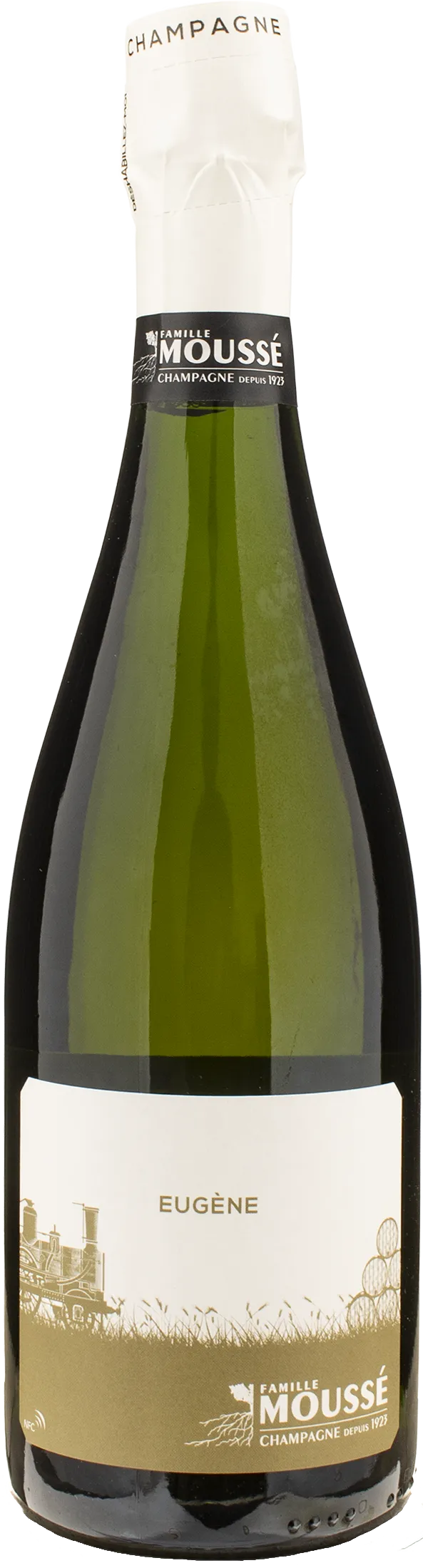

Description
What type of wine it is
Champagne Eugène Extra Brut Mousse Fils is an elegant Blanc de Noirs produced in the iconic Champagne region by the Mousse Fils winery. This fresh and juicy wine is obtained from a blend of Meunier and Pinot Noir, which gives the glass a bright golden yellow colour with amber reflections. On the palate, it is lively and round, driven by a distinct mineral and saline acidity, while the aromatic bouquet releases fragrant notes of white peach, ripe pear, wildflower honey and subtle hints of bread crust. Crafted using the Traditional Method, its complex and fascinating structure is the result of a skilful use of the Solera method.
Where it comes from
The grapes for this Champagne come from the prestigious territories of Cuisles, Jonquery and Châtillon-sur-Marne, located in the heart of the renowned wine-growing region. The terroir of this area is characterised by a very particular soil composition: 90% of the land is made up of green clays resting on a substrate of calcareous marls. This specific geological formation, combined with the cool and temperate climate of the area, plays a fundamental role in the development of the wine's aromatic and structural profile, ensuring excellent minerality and a vibrant acidity that are found intact in the glass.
How it is produced
The production process begins with a rigorous manual harvest of the grapes, carefully selected and placed in small crates. Subsequently, the wine undergoes complete malolactic fermentation. The peculiarity of this Champagne lies in its ageing: it is crafted following the Solera method, maintaining a perpetual reserve started in 2003. Every year, 50% of the wine from the new harvest is added to this reserve, a technique that ensures constant freshness while keeping the deep complexity of the aromatic heritage intact over time. Secondary fermentation in the bottle strictly follows the dictates of the Traditional Method.
History and interesting facts
Created by the founder Eugène Moussé a hundred years ago, this exceptional cuvée represents a profound tribute to the history of the family, which has been active in the industry since 1923. Officially launched in 2003, the creation has undergone a fascinating evolution: initially called Carte Or, it then became Or Tradition and finally L'Or d'Eugène. The centenary year marked a significant evolution of the range with the definitive arrival of Eugène, a masterpiece crafted using the Solera method, which holds a perpetual reserve encompassing the historic vintages between 2003 and 2023.
Awards
-
 89
89/100
Vinous is the online guide from Antonio Galloni, one of the world's leading wine connoisseurs.

Tasting notes

Perfume

Color

Taste
Serve at:
06 - 08 °C
Longevity:
05 - 10 years

- Start up year: 1923


| Name | Mousse Fils Champagne Eugene Extra Brut |
|---|---|
| Type | White green classic method sparkling wine extra brut |
| Denomination | Champagne AOC |
| Size | 0,75 l |
| Alcohol content | 12.5% by volume |
| Grape varieties | 80% Pinot Meunier, 20% Pinot Nero |
| Country | France |
| Region | Champagne region |
| Vendor | Mousse Fils |
| Story | History and interesting facts Created by the founder Eugène Moussé a hundred years ago, this exceptional cuvée represents a profound tribute to the history of the family, which has been active in the industry since 1923. Officially launched in 2003, the creation has undergone a fascinating evolution: initially called Carte Or, it then became Or Tradition and finally L'Or d'Eugène. The centenary year marked a significant evolution of the range with the definitive arrival of Eugène, a masterpiece crafted using the Solera method, which holds a perpetual reserve encompassing the historic vintages between 2003 and 2023. |
| Origin | Cuisles, Jonquery, Châtillon-sur-Marne |
| Soil composition | 90% of the soil is composed of green clays on calcareous marls. |
| Production technique | Traditional method (Solera / perpetual reserve) |
| Wine making | Grapes harvested by hand in small crates. Malolactic fermentation: completed. |
| Aging | Produced using the Solera method, with a perpetual reserve spanning the vintages from 2003 to 2023; each year, 50% of the latest harvest is added to maintain the freshness and complexity of its aromatic profile. |
| Allergens | Contains sulphites |