


Conte Emo Capodilista
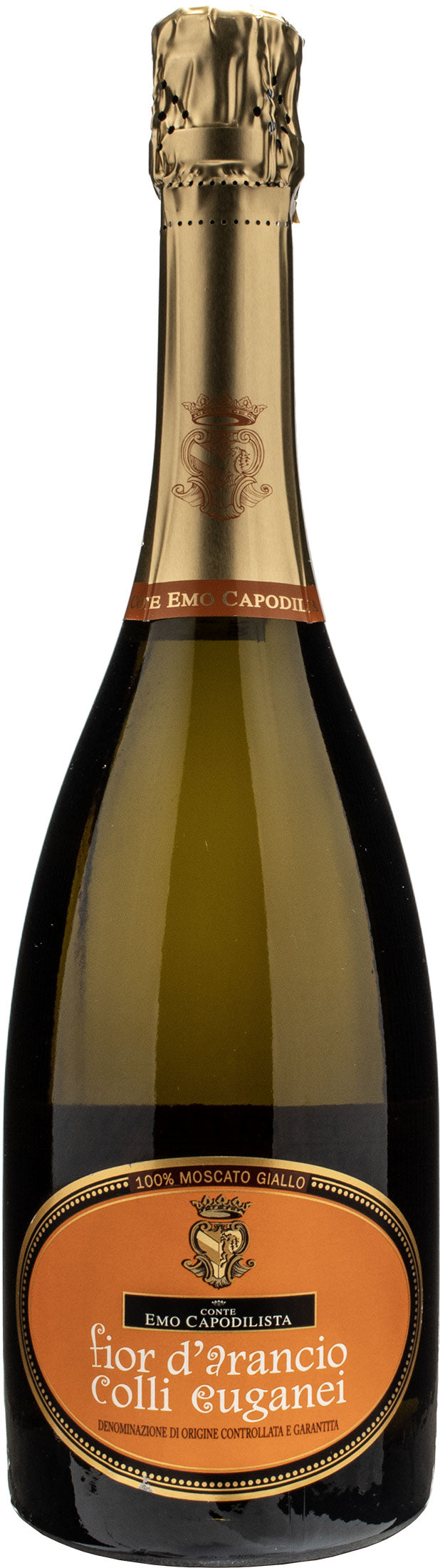
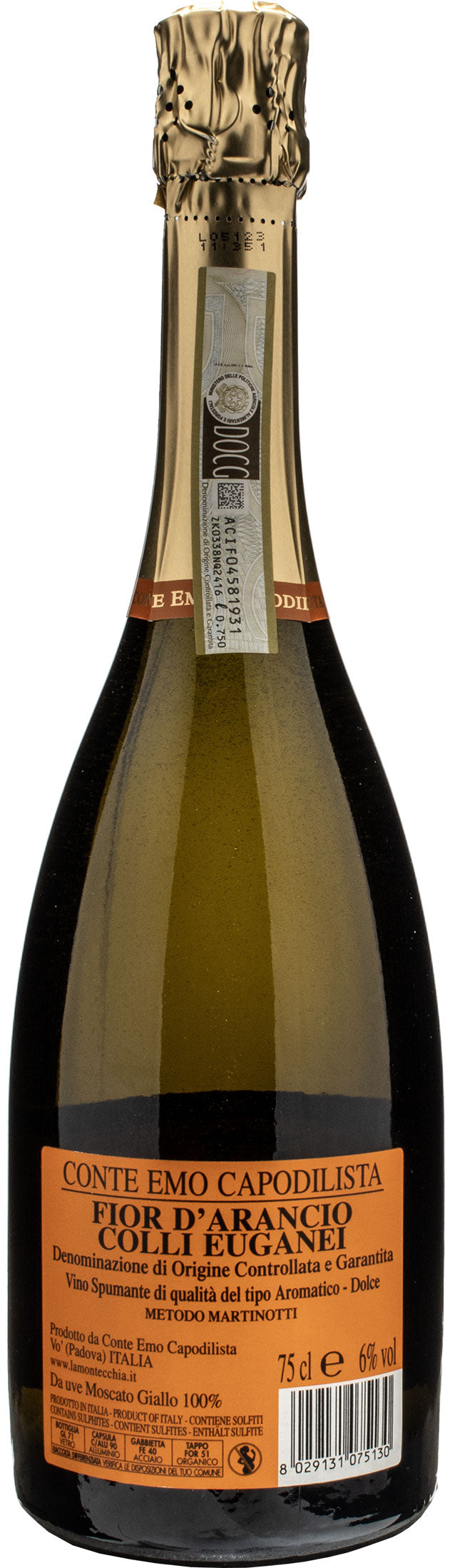
Conte Emo Capodilista Fior d'Arancio Colli Euganei Moscato Spumante Metodo Martinotti
| Denomination | DOCG Colli Euganei Fior d'Arancio Spumante |
|---|---|
| Size | 0,75 l |
| Alcohol content | 6.0% by volume |
| Area | Veneto (Italy) |
| Grape varieties | 100% Moscato Giallo |
| Aging | Bottle ageing for at least 36 months before commercialisation. |
- DOCG Designation: Colli Euganei Fior d'Arancio, sweet white sparkling wine
- Grape variety: 100% Moscato Giallo, hand-picked grapes gently pressed
- Citrus aromas: intense fragrance of orange and lemon, with notes of musk
- Vinification: Martinotti method in steel tanks, must kept at 0.5°C, fermentation at 10°C
- On the palate: fine perlage, persistent sweetness; 110 g/l residual sugar, 6% vol
Description
What type of wine it is
Conte Emo Capodilista's Fior d'Arancio Colli Euganei Moscato Spumante is a sweet and aromatic white wine, a sincere expression of its territory. Produced entirely from Moscato Giallo, this sparkling wine falls under the Colli Euganei Fior d'Arancio DOCG category. It presents as harmonious and persistent, with a sensory profile led by clear citrus notes of orange and lemon and enhanced by a fine and velvety perlage, proving to be an ideal companion for celebratory occasions.
Where it comes from
This sparkling wine originates in Veneto, specifically in Selvazzano Dentro, in the Euganean Hills (Colli Euganei). The area is characterised by medium-textured soils with trachytic outcrops of volcanic origin, which give the grapes their peculiar citrus note. It is precisely from these particular soils that Moscato Giallo, an early-ripening and hardy variety, develops intoxicating scents reminiscent of musk, from which the historical name 'Muscum' derives, defining the wine's aromatic identity.
How it is produced
Production strictly follows the Martinotti (Charmat) Method. The grapes are hand-selected, cooled to 0.5 °C and softly pressed. The free-run must then undergoes secondary fermentation in steel autoclaves, with fermentation conducted at 10 °C. Subsequently, the wine rests at -2 °C for approximately fifteen days and concludes its cycle with an extended bottle ageing of at least 36 months before release, ensuring its complexity.
History and curiosities
The name of this sparkling wine derives from the unique citrus note that characterises the vines grown on the volcanic soils of the Euganean Hills. The term identifying the grape variety has fascinating origins, deriving from the Latin word 'Muscum', as its intoxicating scent is reminiscent of moss. Over time, thanks to a meticulous respect for bottle ageing times, the wine has become the jewel of the La Montecchia winery, owned by the Capodilista family. This absolute dedication has secured immense prestige for Spumante Colli Euganei Fior d'Arancio DOCG.
Awards
-
 2
2One of the most prestigious wine guides in Italy.

Tasting notes

Perlage

Perfume

Color

Taste
Serve at:
06 - 08 °C
Longevity:
03 - 05 years

- Hectares: 45
The numerous awards and recognition from the most notable wine critics like Robert Parker, Luca Maroni, Gambero Rosso and Veronelli have encouraged Giordano Emo to continue along this path. About half of the production is exported abroad. Read more


| Name | Conte Emo Capodilista Fior d'Arancio Colli Euganei Moscato Spumante Metodo Martinotti |
|---|---|
| Type | White charmat method sparkling wine dessert wine aromatic |
| Denomination | Colli Euganei Fior d'Arancio DOCG |
| Size | 0,75 l |
| Alcohol content | 6.0% by volume |
| Grape varieties | 100% Moscato Giallo |
| Country | Italy |
| Region | Veneto |
| Vendor | Conte Emo Capodilista |
| Story | History and curiosities The name of this sparkling wine derives from the unique citrus note that characterises the vines grown on the volcanic soils of the Euganean Hills. The term identifying the grape variety has fascinating origins, deriving from the Latin word 'Muscum', as its intoxicating scent is reminiscent of moss. Over time, thanks to a meticulous respect for bottle ageing times, the wine has become the jewel of the La Montecchia winery, owned by the Capodilista family. This absolute dedication has secured immense prestige for Spumante Colli Euganei Fior d'Arancio DOCG. |
| Origin | Selvazzano Dentro (Padua) |
| Soil composition | Medium paste with trachytic outcrops |
| Plants per hectare | four thousand, eight hundred |
| Fermentation temperature | 10 degrees Celsius |
| Production technique | Martinotti Method (Charmat): manual selection of the grapes, cooling to 0.5 °C, soft pressing; secondary fermentation in steel autoclaves and fermentation at 10 °C. |
| Wine making | Martinotti Method (Charmat): the hand-selected grapes are cooled to 0.5 °C and gently pressed; the free-run juice is sent for the sparkling process in steel autoclaves. Fermentation at 10 °C until the desired pressure is reached, followed by resting for approximately 15 days at −2 °C and ageing in the bottle for at least 36 months before commercialisation. |
| Aging | Bottle ageing for at least 36 months before commercialisation. |
| Total acidity | 7.0 gr/L |
| Residual sugar | 110.0 gr/L |
| Allergens | Contains sulphites |