


Allegrini
Valpolicella Classico Superiore La Grola 2023
| Denomination | DOC Valpolicella Classico Superiore |
|---|---|
| Size | 0,75 l |
| Alcohol content | 13.0% by volume |
| Area | Veneto (Italy) |
| Grape varieties | 70% Corvina, 25% Corvinone, 5% Rondinella |
| Aging | 16 months of maturation: 50% in second-fill barriques and 50% in large 85 hl casks; final bottle ageing for 10 months. |
- Type: Still red wine DOC Valpolicella Classico Superiore, Veneto
- Grape varieties: Corvina, Corvinone and Rondinella from the La Grola vineyard
- Aromas: Blackberry, cherry and violet, with vanilla, tobacco and chocolate
- Winemaking: 15 days in stainless steel, maturation for 16 months in wood and 10 in the bottle
- Accolades: Three Glasses Gambero Rosso and 94 points from James Suckling

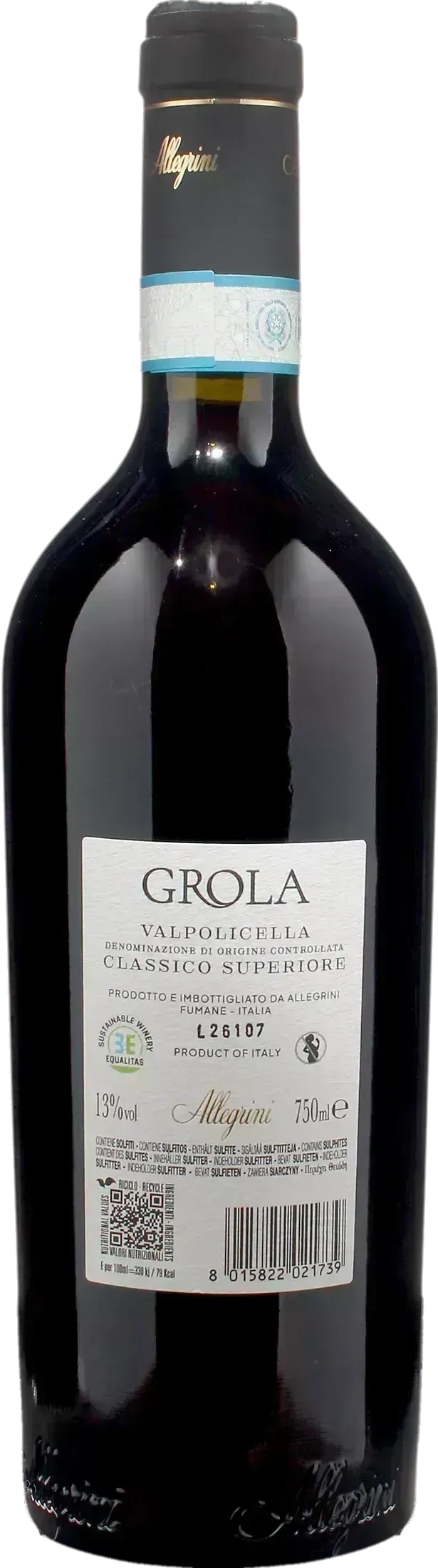
Description
What type of wine it is
The Valpolicella Classico Superiore La Grola by Allegrini is a still red wine born from an elegant blend of Corvina Veronese, Corvinone and Rondinella grapes. This Controlled Designation of Origin (DOC) from Veneto stands out for its solid and defined character, with a tannic structure balanced by ripe and juicy fruit and a lively freshness. The sensory profile offers a varied bouquet of fruit and flowers enriched by notes of vanilla, tobacco and dark chocolate, for a wine fermented in steel and aged in large and small barrels.
Where it comes from
This wine comes from the prestigious La Grola vineyard, situated in the heart of Valpolicella, in the province of Verona. The vines benefit from a south-east exposure, rooting in predominantly calcareous and clayey soil, rich in stones and poor in organic matter. These geological characteristics, typical of the terroir, favour the expression of wines with great structural balance and freshness, reflecting the peculiarities of the Venetian landscape.
How it is produced
Production begins in the second half of September with a manual harvest and a careful selection of the bunches. Fermentation takes place in stainless steel tanks at a controlled temperature for 15 days, applying delicate extractions to preserve the aromatic integrity of the grapes. Subsequently, the wine matures for 16 months: one half ages in second-passage barriques, while the other half rests in large barrels. This process concludes with a further 10 months of bottle ageing before being released onto the market, defining its natural elegance and complexity.
History and curiosities
Founded in 1854, the Allegrini winery represents a long tradition in Valpolicella. The La Grola label was born from the visionary project of Giovanni Allegrini, with the aim of creating a red wine with a unique character. The 2023 vintage was challenging due to the unstable weather, but the favourable climate in September allowed for high-quality grapes to be obtained. The wine has received accolades such as the Tre Bicchieri Gambero Rosso and 94 points from James Suckling.
Awards
-
2023
 94
/100
James Suckling is an influential American wine critic and journalist who worked at Wine Spectator for 30 years. He left the magazine in 2010 to start his own website and guidebook (JamesSuckling.com). He specialises in Italian and Bordeaux wines.

Tasting notes

Perfume

Color

Taste
Serve at:
°C

- Start up year: 1854
- Oenologist: Paolo Mascanzoni e Lorenzo Fortini
- Bottles produced: 850.000
- Hectares: 150
Belonging to the family of the same name since the 16th century, the Allegrini winery is located in the Valpolicella Classica area: in particular, it is situated where vines such as corvina, molinara and rondinella give life to what are considered some of the best red wines of the Peninsula. xtraWine offers numerous bottles of Allegrini Allegrini wines that stand out for their refinement and elegance, very pleasant and capable of enveloping you with every sip, conquering even the most demanding palates. This is due to continuous improvements in production such as the introduction of the use of barriques alongside the traditional large barrels, and even a reduction in the ageing period so as not to alter too much the quality of the grapes used.
Not only Valpolicella, on xtraWine you can find Allegrini wines such as Amarone, Valpolicella and Recioto. Read more


| Name | Allegrini Valpolicella Classico Superiore Grola 2023 |
|---|---|
| Type | Red still |
| Denomination | Valpolicella DOC |
| Vintage | 2023 |
| Size | 0,75 l |
| Alcohol content | 13.0% by volume |
| Grape varieties | 70% Corvina, 25% Corvinone, 5% Rondinella |
| Country | Italy |
| Region | Veneto |
| Vendor | Allegrini |
| Story | History and curiosities Founded in 1854, the Allegrini winery represents a long tradition in Valpolicella. The La Grola label was born from the visionary project of Giovanni Allegrini, with the aim of creating a red wine with a unique character. The 2023 vintage was challenging due to the unstable weather, but the favourable climate in September allowed for high-quality grapes to be obtained. The wine has received accolades such as the Tre Bicchieri Gambero Rosso and 94 points from James Suckling. |
| Origin | La Grola Vineyard, Valpolicella (Veneto, Italy) |
| Soil composition | Predominantly calcareous and clayey, rich in stones and low in organic matter. |
| Cultivation system | Tablemount |
| Harvest | Second half of September |
| Fermentation temperature | 20–25 °C |
| Fermentation | 15 days |
| Production technique | Manual harvesting with selection of the bunches; fermentation in stainless steel tanks at a controlled temperature (20–25 °C) for 15 days with gentle extraction; maturation for 16 months (50% in second-passage barriques and 50% in large 85 hl casks) and 10 months of bottle ageing. |
| Wine making | Manual harvest in the second half of September with bunch selection; fermentation in stainless steel tanks at a controlled temperature (20–25°C) for 15 days with gentle extractions; maturation for 16 months (50% in second-fill barriques and 50% in large 85 hl casks); final bottle ageing for 10 months. |
| Aging | 16 months of maturation: 50% in second-fill barriques and 50% in large 85 hl casks; final bottle ageing for 10 months. |
| Total acidity | 5.5 gr/L |
| PH | 3.47 |
| Residual sugar | 1.8 gr/L |
| Dry extract | 30.7 gr/L |
| Allergens | Contains sulphites |