


Marchesi Antinori
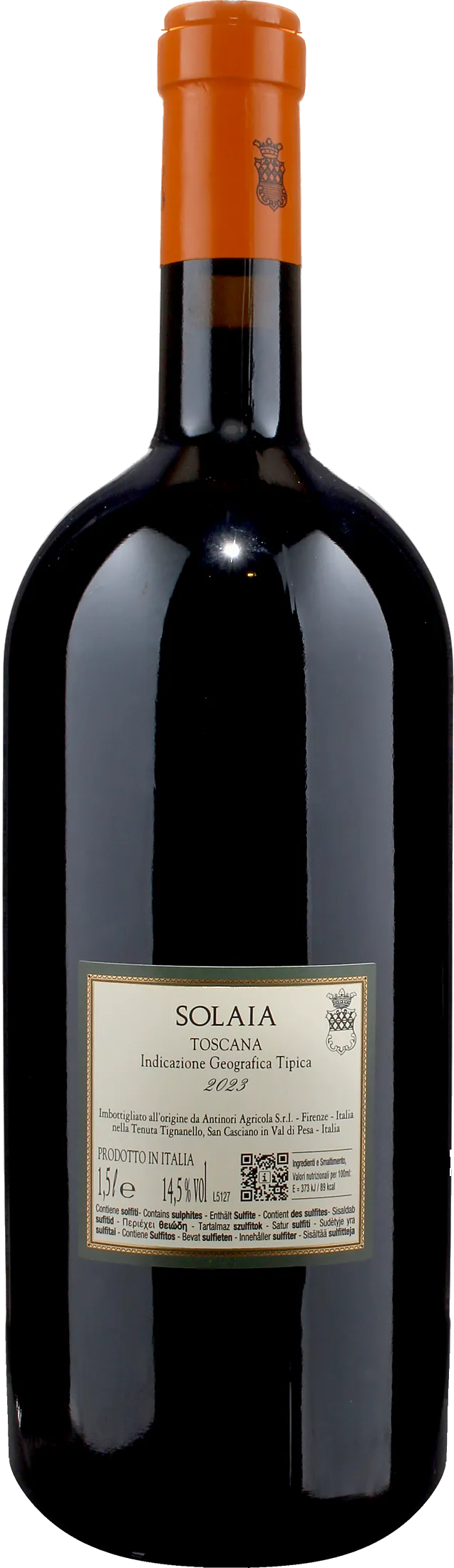
Solaia Magnum 2023
| Denomination | IGT Toscana |
|---|---|
| Size | 1,50 l |
| Alcohol content | 14.5% by volume |
| Area | Tuscany (Italy) |
| Grape varieties | 75% Cabernet Sauvignon, 20% Sangiovese, 5% Cabernet Franc |
| Aging | Ageing in new French oak barrels/barriques for approximately 15–18 months, with initial maturation in separate batches and subsequent blending before bottling. |
- Composition: Cabernet Sauvignon, Sangiovese and Cabernet Franc; Toscana IGT
- Maturation: 15–18 months in new French oak, following fermentation in stainless steel
- Tasting profile: creamy and fresh entry, velvety tannins; persistent and deep finish
- Aroma: blackberry and cherry, with notes of bitter cocoa, coffee, vanilla and dark chocolate
- Format and awards: 1.5 litres, 14.5% vol; 98 points from Decanter and James Suckling

Description
Type of wine
Solaia by Antinori is a celebrated Indicazione Geografica Tipica red wine produced in Tuscany from a blend of Cabernet Sauvignon, Sangiovese and Cabernet Franc. Vinified in steel and aged in French oak barrels, it is full and structured on the palate, with an enveloping entry and silky tannins that lend elegance to the drink. The tasting reveals a distinct freshness, accompanied by clear notes of blackberry, cherry, bitter cocoa, vanilla and coffee. The aromatic profile concludes in a deep and persistent finish, a faithful expression of its identity.
Origin
This wine originates from the Tignanello Estate, located in the heart of Chianti Classico, between the Greve and Pesa river valleys. The vineyards extend across south-west facing slopes at an altitude between 350 and 400 metres. The soil, of Pliocene origin, is composed of a limestone matrix of alberese and galestro, enriched with veins of clay and marine fossils. The vines benefit from a climate characterised by significant temperature fluctuations between day and night, ensuring optimal ripening. These specific pedoclimatic characteristics give the wine a compact structure and a vibrant energy.
Production
After careful manual selection, the grapes are de-stemmed and gently crushed. The must is transferred by gravity into conical steel tanks, where fermentation and maceration take place at a controlled temperature. Each individual parcel is vinified separately to optimise extraction and preserve aromatic integrity. Subsequently, the wine completes malolactic fermentation and matures for approximately fifteen to eighteen months in French oak barrels. At the end of the ageing process, the different batches are combined in the final blend, which defines the harmony and elegance that distinguish this wine.
History and Interesting Facts
Created in 1978 at the Marchesi Antinori's Tignanello Estate, this celebrated Super Tuscan is a true icon of the Italian oenological renaissance. The prestigious cuvée, originally composed of Cabernet Sauvignon and Cabernet Franc, has masterfully integrated Sangiovese over the years to perfect its balance. Produced exclusively in exceptional vintages, it is distinguished by an innate elegance and absolute international prestige, as evidenced by the 98 points awarded by both Decanter and James Suckling.
Awards
-
2023
 98
98/100
Decanter is a wine and lifestyle magazine, published monthly in around 90 countries. The magazine includes industry news, classic guides and advice on wine and spirits.
-
2023
 97
97/100
James Suckling is an influential American wine critic and journalist who worked at Wine Spectator for 30 years. He left the magazine in 2010 to start his own website and guidebook (JamesSuckling.com). He specialises in Italian and Bordeaux wines.
-
2023
 97
97/100
Vinous is the online guide from Antonio Galloni, one of the world's leading wine connoisseurs.


Tasting notes

Perfume

Color

Taste
Serve at:
18 - 20 °C
Longevity:
Over 25 years
Decanting time:
1 hour

- Start up year: 1385
- Oenologist: Renzo Cotarella
The Antinori family’s first encounter with wine dates back to 1385, when Giovanni di Piero Antinori joined the Guild of Wine Merchants to make the best use of the family’s country properties in Valdarno, around Florence.
However, it was not until the 16th century that banker and merchant Alessandro Antinori made the wine from his estates famous in Italy and abroad, travelling from Lyons to Flanders, and from Spain to Algiers.
Wine was to remain the family’s passion and main business activity, so much so that in 1898 the "Fattoria dei Marchesi Lodovico e Piero Antinori" was created by brothers Lodovico and Piero, the sons of Marchese Niccolò – a direct descendent of that other Niccolò who purchased Palazzo Antinori in 1506 and poured his efforts into publicising Tuscan wines around the world and creating fine quality products. For 26 generations the Antinori family have continued to make history.
In 2023, at the beginning of February, Villa Antinori Toscana IGT 2019 was named the third wine in the world, the only Italian wine, in Wine Specator's Top 10 Values 2022: the list of the 10 wines that according to the American magazine represent world excellence in terms of value for money. Read more


| Name | Antinori Solaia Magnum 2023 |
|---|---|
| Type | Red still |
| Denomination | Toscana IGT |
| Vintage | 2023 |
| Size | 1,50 l |
| Alcohol content | 14.5% by volume |
| Grape varieties | 75% Cabernet Sauvignon, 20% Sangiovese, 5% Cabernet Franc |
| Country | Italy |
| Region | Tuscany |
| Vendor | Marchesi Antinori |
| Story | History and Interesting Facts Created in 1978 at the Marchesi Antinori's Tignanello Estate, this celebrated Super Tuscan is a true icon of the Italian oenological renaissance. The prestigious cuvée, originally composed of Cabernet Sauvignon and Cabernet Franc, has masterfully integrated Sangiovese over the years to perfect its balance. Produced exclusively in exceptional vintages, it is distinguished by an innate elegance and absolute international prestige, as evidenced by the 98 points awarded by both Decanter and James Suckling. |
| Origin | Tenuta Tignanello, in the heart of Chianti Classico between the Greve and Pesa valleys (Tuscany) |
| Climate | Hot and dry with subsequent rain and cooler nights |
| Soil composition | Calcareous rocky soil (alberese) with galestro and veins of Pliocene clay |
| Yield per hectare | Less than 8,000 kg per hectare |
| Harvest | The grape harvest began in early October and finished on 13 October. |
| Fermentation temperature | Average temperature of 27 °C, never exceeding 31 °C |
| Production technique | Manual selection and sorting of the berries; destemming and gentle crushing; gravity transfer into truncated conical stainless steel tanks with fermentation and maceration on the skins at a controlled temperature in separate batches; malolactic fermentation in barriques; ageing in new French oak barrels/barriques for approximately 15–18 months with final blending before bottling. |
| Wine making | Manual selection and sorting of the berries; destemming and gentle crushing; gravity transfer into 60 hl truncated conical stainless steel tanks; fermentation and maceration on the skins at a controlled temperature in separate batches; racking; malolactic fermentation in second and third-use barriques; ageing in new French oak barrels for approximately 15–18 months with initial separate maturation and subsequent blending before bottling. |
| Aging | Ageing in new French oak barrels/barriques for approximately 15–18 months, with initial maturation in separate batches and subsequent blending before bottling. |
| Allergens | Contains sulphites |